Open post
insybio-logo-full-color

New Scientific Publication on TRAF3 in Breast Cancer Cell Survival and Immune Regulation

InSyBio is happy to announce a new scientific publication titled “Dual Role of Cancer Epithelial-Specific TRAF3 in Regulating Breast Cancer Cell Survival and Lymphocyte Activity,” published in International Journal of Molecular Sciences.

We would like to congratulate all the authors, Chaido Sirinian, Anne-Lise de Lastic, Harry Zaverdas, Martha Nifora, Dimitra Georgakopoulou, Martina Samiotaki, Maria Ioanna Argentou, Stavros Peroukidis, Søren E. Degn, Maria Rusan, Konstantinos Theofilatos, Seferina Mavroudi, Anastasios D. Papanastasiou, and Angelos Koutras, on this publication!

The study investigates the role of TRAF3 in breast cancer, focusing on both cancer cell survival and interactions with the tumor immune microenvironment. TRAF3 is an important regulator of NF-κB signaling, with established roles in immune function, but its specific functions in cancer remain complex and context-dependent.

To examine this role, the authors employed a wide array of experimental and computational approaches, such as analysis of public breast cancer datasets, TRAF3-expressing breast cancer cell lines, mass spectrometry analysis, functional assays, co-culture systems with PBMCs, pathway analysis, and single-cell transcriptomics.

The findings suggest that higher TRAF3 expression is associated with more favorable prognosis-related features in breast cancer. In breast cancer cell models, TRAF3 overexpression reduced colony formation and affected apoptosis-related markers, including reduced BCL-2 and increased Caspase-9 expression. Proteomic and pathway analyses further linked TRAF3 with processes related to cell cycle regulation, apoptosis, and immune responses.

Importantly, the study also showed that TRAF3-expressing breast cancer cells may influence immune activity. These cells displayed reduced PD-L1 levels and, in co-culture experiments, promoted a more pro-inflammatory immune profile, including increased IFN-γ and TNF-α, reduced IL-10, lower Treg levels, and changes in NK cell populations. Single-cell transcriptomic analysis further supported the association between TRAF3 expression in cancer epithelial cells and immune-related pathways, including antigen presentation and interferon-related responses.

InSyBio is especially pleased to have contributed to this publication through the participation of Harry Zaverdas, Konstantinos Theofilatos, and Seferina Mavroudi among the co-authors. This collaboration showcases the value of integrating bioinformatics single-cell analysis and proteomics, with cancer biology and immunology, to better understand the complex interactions between breast cancer cells and the tumor microenvironment.

This publication represents an important contribution to breast cancer and immuno-oncology research, supporting further investigation of TRAF3 as a key molecule for regulating cancer cell survival and the immune microenvironment.

Link references

You can find the article here: https://doi.org/10.3390/ijms27104414 .

Open post
insybio-logo-full-color

New Scientific Publication on Biomimetic Bioreactors for Tissue Engineering within the OSTEONET Project

InSyBio is happy to announce a new scientific publication titled “Biomimetic characterization by micro-computed tomography (μCT) of 3D hollow fibre membrane network bioreactors for tissue engineering,” authored by Giuseppe Falvo D’Urso Labate, Chiara Morano, Thomas De Schryver, Harry Zaverdas, Luigi De Napoli, Gionata Fragomeni, Luc Van Hoorebeke, Patrick Segers, Mathieu Boone, Konstantinos Theofilatos, Joerg Christian Gerlach, and Gerardo Catapano.

The study investigates 3D hollow fibre membrane network bioreactors for tissue engineering, focusing on their potential to mimic key architectural features of bone tissue. Using non-invasive and non-destructive micro-computed tomography (μCT), combined with advanced image analysis, the authors characterized the pore and void distribution within the extracapillary space of BRx-HFMB bioreactors. The results suggest that the pore architecture and specific surface area of these bioreactors resemble important structural characteristics of bone tissue, supporting cell migration, adhesion, and culture at clinically relevant cell densities. The membrane network also enables medium perfusion and acts as a spatially distributed oxygen source, improving oxygen transport across the cell construct compared with static bioreactor systems.

InSyBio is especially pleased to have contributed to this scientific output through the participation of Harry Zaverdas and Konstantinos Theofilatos among the authors. The publication highlights the value of interdisciplinary collaboration across bioengineering, μCT imaging, image analysis, tissue engineering, and computational approaches for the development of advanced in vitro bone tissue models.

This work was developed within the framework of the OSTEONET project, funded by the European Community under the Horizon Europe Marie Skłodowska-Curie Actions Staff Exchange programme, grant agreement No. 101086329. OSTEONET aims to develop reliable and sustainable 3D in vitro models of healthy and aged bone tissue for preclinical drug screening, physiology studies, and research on bone ageing, mechanobiology, and drug response.

Link references

You can find the article here: https://doi.org/10.1039/D6BM00185H .

More information about the OSTEONET project can be found here: https://osteonethorizon.com/.

Open post

InSyBio Selected for the Start4Health ScaleUps Studio Programme

InSyBio has been selected to join the ScaleUps Studio track of the Start4Health programme, an initiative led by Pfizer’s Center for Digital Innovation (CDI). This selection represents an important milestone for the company and further reinforces its position within the digital health innovation ecosystem.

Start4Health is designed to connect innovative companies with Pfizer’s innovation ecosystem and to facilitate structured engagement around the co-development and real-world application of digital health solutions. Within this framework, the ScaleUps Studio track is specifically tailored to more mature startups and scaleups, with the aim of enabling them to discuss and co-design potential collaboration projects with Pfizer. According to Pfizer CDI, the track is intended to support established companies in scaling operations, expanding market reach, and further optimising their solutions through the exploration of a possible collaboration with Pfizer’s Center for Digital Innovation.

As part of the ScaleUps Studio activities scheduled for February–March 2026, InSyBio will participate in a tailored sequence of actions designed to deepen mutual understanding and identify concrete collaboration opportunities. These include preparation workshops delivered with the support of Found.ation to shape collaboration concepts, introductory sessions with Pfizer’s Embedded Innovation team, and a dedicated Solution Exploration Workshop with Pfizer business units.

The broader Start4Health framework has been developed to support meaningful interaction between participating companies and Pfizer CDI stakeholders, allowing both sides to identify common ground, potential challenges, and next steps. This structured approach is intended to create a basis for high-quality engagement and to ensure that collaboration discussions are grounded in both strategic relevance and practical feasibility.

For InSyBio, participation in Start4Health is closely aligned with its commitment to advancing innovation in bioinformatics, artificial intelligence, and digital health. Being selected for the ScaleUps Studio track validates the company’s expertise and opens new pathways for translating its technologies into impactful healthcare solutions.

InSyBio looks forward to collaborating with Pfizer and the wider innovation ecosystem through this programme and to exploring how its capabilities can contribute to the future of digital health. This selection constitutes another important step in the company’s effort to bridge research excellence with real-world healthcare impact.

Link references
Official Start4Health page by Pfizer CDI: https://centerfordigitalinnovation.pfizer.com/start4health

Open post

New Scientific Publication on Bone Regeneration within the REGENERATION Project

InSyBio is happy to announce a new scientific publication led by Filip Stojceski, titled “Molecular-level understanding of the aging bone and regeneration mechanisms using computational methods”, published in Osteoporosis International. The article is available as an open-access publication (https://doi.org/10.1007/s00198-026-07903-z )and was developed in the context of the REGENERATION project.

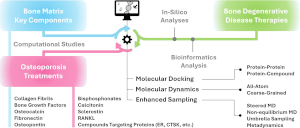
The publication provides a comprehensive review of current computational research on bone ageing, regeneration, and osteoporosis, with particular emphasis on how molecular dynamics, molecular docking, and bioinformatics approaches can support a deeper understanding of bone biology and contribute to the development of more targeted therapeutic strategies.

More specifically, the paper examines three major scientific areas: first, the structural interactions within the bone matrix; second, the role of key non-collagenous proteins in the mineralisation process; and third, computational strategies for drug discovery targeting pathways such as sclerostin, RANKL, and estrogen receptors. The publication also underscores the growing importance of integrating computational predictions with experimental and clinical data in order to move toward more personalised and effective approaches for the treatment of osteoporosis.

InSyBio is especially pleased to have contributed to this scientific output through the participation of Harry Zaverdas, Konstantinos Theofilatos, and Seferina Mavroudi among the co-authors. Through its involvement in REGENERATION, InSyBio works alongside academic and industrial partners to advance innovative approaches for aged bone tissue research and regenerative medicine.

Congratulations are due to Filip Stojceski of the Dalle Molle Institute for Artificial Intelligence, USI-SUPSI, for leading this publication, and to all co-authors and consortium partners involved, including Andrea Danani and Gianvito Grasso from the Dalle Molle Institute for Artificial Intelligence, USI-SUPSI; Alessia Mengoni and Mario Ledda from the Institute of Translational Pharmacology, National Research Council; Giuseppe Falvo D’Urso Labate from Cellex S.R.L.; and Athanasios Kalogeras from the Industrial Systems Institute, Athena Research Center.

The REGENERATION project is described in the source text as a Horizon Europe Marie Skłodowska-Curie Actions Staff Exchange project focused on the development of reliable and sustainable in vitro models of healthy and aged bone tissue, including models treated with Quantum Molecular Resonance (QMR), with the broader aim of enabling more personalised therapies, improved preventive care for older people, and better treatment and pain management for bone damage. The Springer article additionally states that the work was developed as part of the REGENERATION project and cites EU funding support.

This publication constitutes an important scientific contribution to the field of bone regeneration and osteoporosis research and reflects the value of interdisciplinary collaboration across computational science, bioinformatics, and translational biomedical research.

Link references
You can find the article here: https://doi.org/10.1007/s00198-026-07903-z

More information about the REGENERATION project can be found here: https://regenerationhorizon.eu/

Open post

InSyBio Accepted into the A4SUSTINNO Accelerator Programme

InSyBio has been accepted into the A4SUSTINNO accelerator programme, a significant step in the company’s innovation and growth trajectory and an important opportunity to further strengthen its activities in the fields of bioinformatics, artificial intelligence, and digital health.

The A4SUSTINNO accelerator is a free acceleration programme addressed to startups and teams active in the digital technologies sector that wish to develop their business ideas and advance them in a structured and dynamic way. The initiative is organised by Patras Science Park in collaboration with the entrepreneurship and innovation hub Point of Synergy, offering:

  • At least 40 hours of educational content
  • 4 hours of personalised support for each participating company or team
  • 2 events dedicated to the presentation of innovative ideas and projects.

Through this structure, the programme aims to enhance the skills of participants and support the development and maturation of promising ventures in digital technologies.  An equally important component of the programme is the opportunity for networking with entrepreneurs, mentors, and experts, enabling the creation of valuable collaborations and laying the groundwork for future growth opportunities. In this way, A4SUSTINNO seeks not only to accelerate individual teams but also to contribute more broadly to the Greek innovation ecosystem.

For InSyBio, participation in A4SUSTINNO is fully aligned with its strategic objective of transforming advanced research into practical innovation with real-world applications. The programme provides a structured environment in which the company can further refine its solutions, strengthen its business development capabilities, and expand its connections within the national innovation landscape.

InSyBio would like to thank Patras Science Park and Point of Synergy for this opportunity and for their contribution to supporting entrepreneurship and innovation in Greece. The company looks forward to the next stages of the programme and to further advancing its ideas toward impactful implementation!

Find more information on the project, the partners and organizers in the following links!

A4SUSTINNO announcement and information: https://psp.org.gr/en/main-activities/projects/a4sustinno/

Patras Science Park official website: https://psp.org.gr/

Point of Synergy official website: https://pointofsynergy.com/

Open post

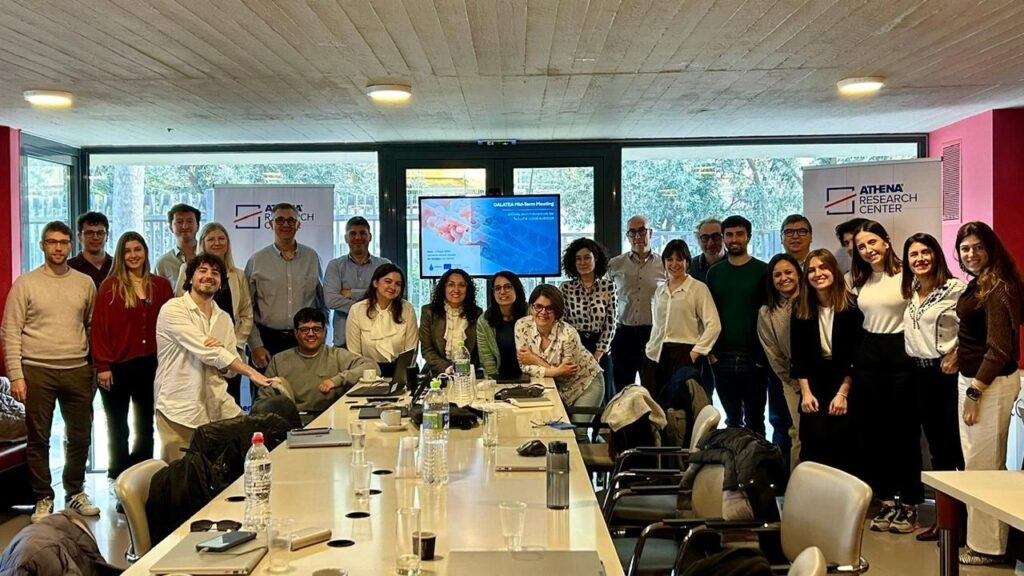
Successful Completion of the GALATEA Midterm Meeting in Athens

InSyBio participated in the midterm meeting of the GALATEA Horizon Europe Project, which took place in Athens on 11–12 March 2026 at the Athena Research Center. The meeting marked an important milestone in the implementation of the project and brought together consortium partners from across Europe to review the progress achieved during the first phase of the action.

During the two-day meeting, participants reviewed the scientific and technical work carried out to date, with particular emphasis on research progress, training activities, and secondments. The meeting also provided an opportunity to assess the results obtained so far, exchange expertise across disciplines, and discuss the planning of the next phase of the project.

InSyBio contributed to the meeting through the participation of its members, Harry Zaverdas, Konstantinos Theofilatos, Konstantina Liontou, and Foteini Kiskira, who took part in the consortium discussions and knowledge-exchange activities.

A central element of the meeting was the dynamic presentation of experiences and results from researchers and secondees, highlighting the interdisciplinary collaboration and knowledge transfer that constitute a core component of GALATEA. The consortium also welcomed the Project Officer, whose feedback and strategic guidance were especially valuable for shaping the next implementation period.

GALATEA is focused on advancing innovation in digital health through the development of AI-driven digital twin technologies for personalised infant nutrition. The project continues to bring together expertise from multiple disciplines in order to contribute to better-informed, data-driven approaches for the healthiest possible start in life.

InSyBio would like to thank all consortium partners for the constructive collaboration, as well as the Athena Research Center for hosting a productive and inspiring meeting in Athens. Further information on the project is available on the official GALATEA project website.

For more information on the programme, you can also visit theofficial GALATEA project website: https://galateahe.eu/

Open post

InSyBio Suite Version 3.4 is announced, introducing a major upgrade of the InSyBio Interact tool for advanced protein interaction analysis and biological network discovery

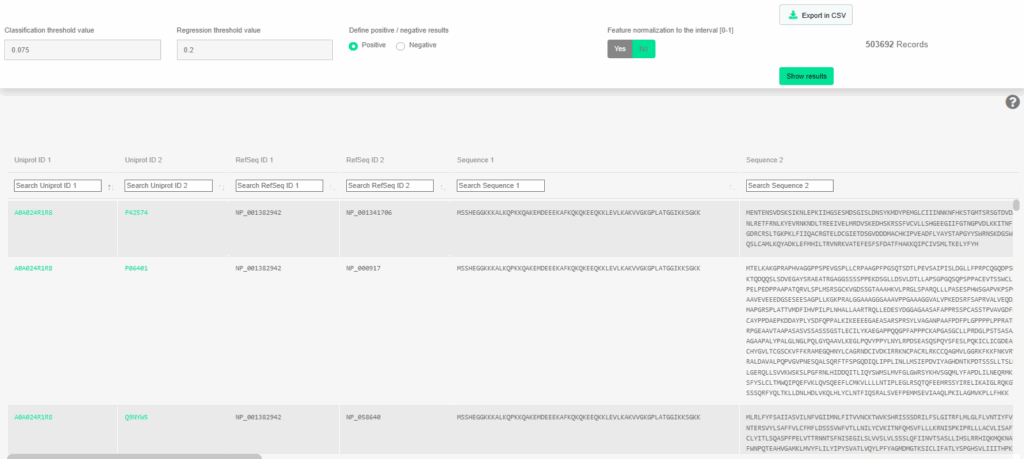
InSyBio is thrilled to announce the release of InSyBio Suite Version 3.4, with a major upgrade to the InSyBio Interact tool, an advanced environment for protein analysis, protein–protein interaction (PPI) information retrieval, functional annotation, and biological network creation.

InSyBio Interact v3.4 features improved PPI search capabilities supported by a comprehensive database of more than 2 million positive and negative interactions. The tool includes the fully resolved interactome of all taste receptors (816,518 potential interactions), mined as part of the VIRTUOUS Horizon Europe 2020 project (https://www.virtuoush2020.com/), as well as the complete interactome of bone degeneration–related proteins (877,501 potential interactions), characterized through the REGENERATION Horizon Europe 2020 project (https://regenerationhorizon.eu/), along with many additional mined interactions. These interactions were predicted using an advanced ML methodology based on InSyBio’s proprietary Evolutionary Optimization Algorithm for developing classification and regression models that estimate both PPI class and interaction affinity. Users can filter interactions by adjusting their preferred classification confidence and affinity thresholds, and each interaction is accompanied by 75 computationally derived features and cross-references to major PPI databases, enabling comprehensive interpretation and high-confidence filtering.

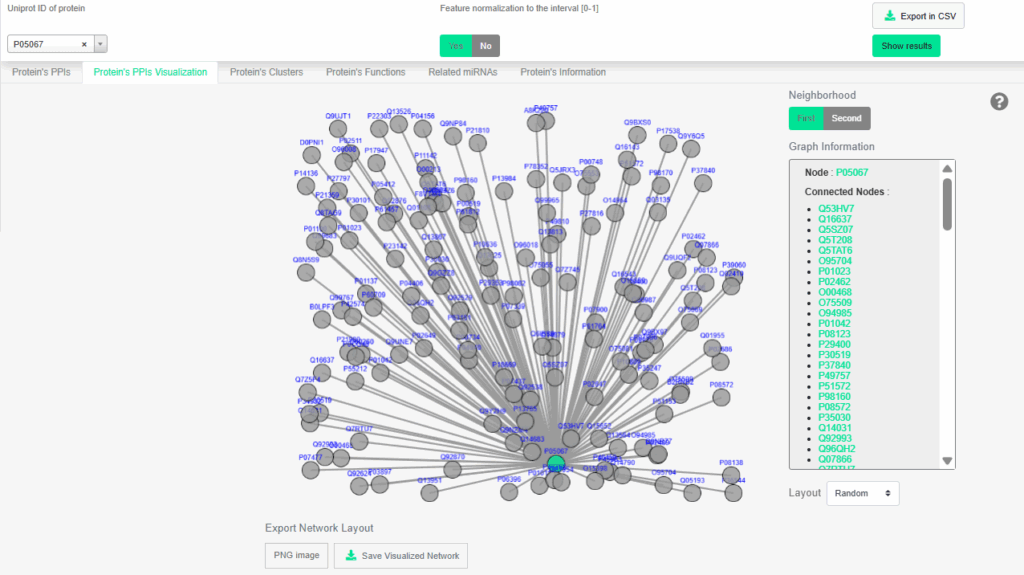
The new version also introduces an enhanced protein analysis module that allows users to retrieve rich structural, sequential, and functional information for any protein, including detailed GO terms, miRNA regulators, and protein interaction partners enriched with a wide range of structural, co-expression, and physicochemical features. These data can be instantly visualized through an upgraded, interactive network interface that supports multiple layouts and downloadable graph formats.

The release features a new generation of computationally predicted protein complexes, developed using an updated EEMC algorithm. These complexes are presented with functional annotations and direct links to visualization, enabling quick identification of biologically meaningful modules.

Functional exploration is further strengthened with a redesigned GO term interface, allowing researchers to examine proteins and complexes associated with any biological process, molecular function, or cellular component. A rebuilt dataset creation module enables users to generate balanced or custom PPI datasets, including optional normalization and iRefIndex-verified interactions, with an option to store them directly within the InSyBio Data Store.

For systems-level analysis, users can now create full biological networks from lists of biomarkers or protein identifiers. These networks can be interactively visualized, explored, and exported in multiple formats, with full compatibility with InSyBio BioNets for further analysis.

With Version 3.4, InSyBio strengthens the field of PPI analysis, protein exploration, and network biology. The updated InSyBio Interact environment brings together high-accuracy PPI prediction, an expanded protein search module, and complex identification. By utilizing InSyBio’s advanced ML capabilities, researchers can move smoothly from examining a single protein’s characteristics to exploring its interaction partners, regulatory molecules, functional roles, and placement within broader biological systems.

InSyBio CEO Labros Digonis stated: “Protein interaction analysis remains fragmented and technically demanding. With Version 3.4, we integrate PPI prediction, protein analysis, complex detection, and interactive network biology into a single, user-friendly platform. Our goal is to empower researchers to extract actionable insights from complex biological data without requiring programming or specialized bioinformatics expertise.

A detailed description of all new features is available in the InSyBio Interact User Manual v3.4: ( InSyBio Interact – InSyBio )

Researchers may request a free one-month trial of InSyBio Suite, including all new functionalities, by clicking on the following link: (https://suite.insybio.com/)

About InSyBio. InSyBio is an international pioneer biotechnology company revolutionizing the medical field through targeted biomarker discovery, highly accurate predictive analytics, and the development of personalized tests for drugs. Its solutions provide the R&D departments of Pharma and Research Institutes with the means to meet their most challenging research and innovation goals. This is done through a sophisticated, software-as-a-service, machine learning platform that comprehensively integrates multi-omics and clinical data, thus reducing the number of samples and additional validation experiments needed. Since 2013, InSyBio has worked with hundreds of academics, large and small companies, hospitals, and research centers, allowing them to succeed in their biomarker discovery tasks with an increase of at least 10% in predictive accuracy and a decrease of at least 80% in overall time and cost.

Open post

InSyBio Advances Understanding of Molecular Mechanisms Involved in Human Taste Using Machine-Learning and Network Analytics

A unique Machine-Learning and Molecular Modelling pipeline focusing on the interactome of the Taste Receptors has been released in a new publication from the InSyBio team in collaboration with a team of exceptional researchers from Dalle Molle Institute for Artificial Intelligence (Switzerland), and Politecnico di Torino (Italy) in the framework of VIRTUOUS Project, an EU Horizon 2020 program.

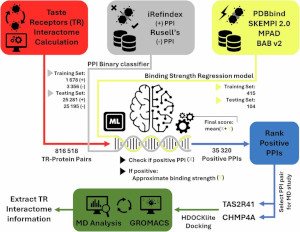
In this study, a Machine-Learning (ML) methodology was developed for predicting binary Protein-Protein Interactions (PPIs) and ranking them based on their computationally predicted affinity. The ML models developed were then applied for resolving the Taste Receptor interactome and detecting the most important interactions of Taste Receptors from the multitude of potential ones. The detected interactions were further characterized through Molecular Dynamics analysis, verifying novel interactions of TAS2R41, such as the TAS2R41-CHMP4A. The classification and regression models applied were based on InSyBio’s multi-objective evolutionary optimization algorithm that is implemented in InSyBio Suite, showcasing the wide range of applications of InSyBio’s biomarker discovery and predictive analytics algorithms and pipelines.

This pipeline aims to facilitate taste perception research for nutrition and pharmaceutical companies and laboratories by filtering and characterizing the most significant Taste Receptor interactions for further studies. The paper was published in the NPJ Science of Food journal of the Springer Nature publishing company (https://rdcu.be/euiWe).

Image: Flowchart of the proposed ML and Molecular Dynamics analysis pipeline applied for the Taste Receptor Interactome.

Labros Digonis, CEO of InSyBio, commented on the importance of the tool:

“We are proud for this unique application of our machine learning and network analytics technology. Resolving the molecular mechanisms of taste is essential for engineering new food products and studying the health implications and downstream effects of different food products. This was an excellent collaborative result of our R&D working together with universities and research institutes in Italy, Greece and Switzerland. Congratulations to the pioneer team!”

About Virtuous: The EU-funded VIRTUOUS project (Marie Skłodowska-Curie Research and Innovation Staff Exchange (RISE) – https://virtuoush2020.com/) is dedicated to the development of a virtual tongue made by an integrated computational framework that can screen food for natural components by binding taste receptors. This international consortium includes eight academic and industry participants from four European countries. Using a variety of computational and experimental data, partners plan to create an algorithm for the prediction of the organoleptic profile of the food based on its chemical composition. The potential application of this platform as a taste predictor is in the food industry, modern precision agriculture, and as a link to neuroscience for taste determination.

About InSyBio: InSyBio is an international pioneer bioinformatics revolutionizing the medical field, clinical trials and food/nutrition industries through targeted biomarker discovery and highly-accurate predictive analytics.

InSyBio solutions provide the R&D departments of Pharma, Research Institutes and Food/Nutrition companies, with the means both analytically and computationally, to meet their challenging research and innovation goals (such as robust biomarker discovery and accurate predictive models). This is done through a sophisticated, software-as-a-service, machine learning platform which comprehensively integrates multi-omics data reducing the number of samples and additional validation experiments needed. Since 2013, InSyBio has worked with hundreds of academics, large and small companies, hospitals and research centers allowing them to succeed in their biomarker discovery tasks with an increase of at least 10% in predictive accuracy and decrease of at least 80% in overall time and cost.

Visit www.insybio.com to see how InSyBio can help you reach your R&D goals in the era of Precision Medicine and Nutrition.

Position: Full Stack Web Developer 

We are seeking a talented and experienced Full Stack Web Developer to join our team. The ideal candidate will have a strong background in web development, using PHP frameworks (we are using Yii Framework), JavaScript and PostgreSQL. This role involves deploying applications, managing version control through Bitbucket, maintaining WordPress websites and ensuring the smooth operation of all systems.

If you are detail-oriented, collaborative, and passionate about creating efficient, scalable web applications, we’d love to hear from you!

Key Responsibilities

  • Design, develop and maintain InSybio’s web applications using PHP, HTML, CSS, JavaScript.
  • Design and develop user-friendly, visually appealing, and responsive web interfaces that meet business and user requirements.
  • Design, manage, and optimize PostgreSQL databases.
  • Experienced in using Linux for server management, process monitoring, and troubleshooting.
  • Manage version control processes.
  • Build, customize, and maintain WordPress websites, including themes and plugins.
  • Debug and resolve technical issues in both development and production environments.
  • Manage cloud based infrastructures in platforms such as Google Cloud and IBM Cloud.
  • Collaborate with team members to deliver high-quality, scalable, and maintainable solutions.
  • Perform secondments in EU-based research institutes in the context of EU-funded projects (eg. OsteoNet –https://osteonethorizon.com/)

Required Qualifications

  • Experience with PHP Web Application Frameworks.
  • Strong knowledge of JavaScript, jQuery and integration with 3rd JavaScript libraries for frontend development.
  • Experience with CSS and Bootstrap Framework.
  • Experience with PostgreSQL database.
  • Familiarity with version control systems, particularly Bitbucket.
  • Expertise in developing and managing WordPress websites.
  • Strong debugging, troubleshooting, and problem-solving skills.
  • Ability to learn fast and work in an interdisciplinary environment

Preferred Qualifications

  • Experience with PHP Yii Framework.
  • Experience with Python and Data Analytics Packages.
  • Experience in bioinformatics, AI and Machine Learning (not essential)

If you are interested please apply and sending us an email at careers@insybio.com with your cover letter and CV.

Open post

InSyBio announces Novel of Multiple Taste Predictor based on a Multiobjective Machine Learning method

A novel predictor for multiple taste sensations based on a multi-objective Machine Learning method was published by InSyBio in the NPJ Science of Food journal of the Springer Nature publishing company (https://rdcu.be/dOVbA). This new predictor, namely Virtuous Multi-Taste, was developed in collaboration with a team of exceptional researchers from Politecnico di Torino (Italy), Industrial Systems Institute (Greece) and Dalle Molle Institute for Artificial Intelligence (Switzerland) in the framework of VIRTUOUS Project, an EU Horizon 2020 program.

This work provides a valuable tool for predicting the taste of chemical compounds based on their most important physiochemical properties. The tool is designed to analyze different compounds and provide as output the percentage of contribution of four different tastes- sweet, umami, bitter and other- to the overall taste of each query compound. The multi-class predictor was created based on InSyBio’s multi-objective evolutionary optimization algorithm that is implemented in InSyBio Suite, showcasing the wide range of applications of InSyBio’s biomarker discovery and predictive analytic algorithms and pipelines.

The Virtuous Multi-Taste tool will accelerate taste perception research by providing nutrition and pharmaceutical companies and laboratories with a much-needed tool for compound design based on taste. The tool itself can be accessed through a web-based interface: https://virtuous.isi.gr/#/virtuous-multitaste.

Image: (a) The Virtuous Multi-Taste web-based interface and the result of compound search indicating (b) each compound’s structure and (c) the percentage of each taste’s representation in the final compound taste.

The vision of the Virtuous project, as previously stated by Dr. Marco Agostino Deriu, was to “build an intelligent machine able to decrypt a sensation by modelling the biophysical architecture of our body, covering all required competencies for this ambitious challenge, starting from molecular and multiscale modelling techniques, to artificial intelligence algorithms; experimental facilities to analyze natural product typical of the Mediterranean diet such as wine and oil“

Labros Digonis, CEO of InSyBio, commented on the importance of the tool:

We are proud of acquiring, at last, the ability to predict the taste of chemical compounds based on their physiochemical properties. The potential to revolutionize multiple industries by improving product development processes, enhancing consumer satisfaction and fostering innovation in taste-related research is inherent to this revolutionary discovery and is here to stay. We will be seeing a lot of new, cost-efficient, more targeted and senses-satisfying products based on this. Congratulations to the pioneer team!”

About Virtuous: The EU-funded VIRTUOUS project (Marie Skłodowska-Curie Research and Innovation Staff Exchange (RISE) – https://virtuoush2020.com/) is dedicated to the development of a virtual tongue made by an integrated computational framework that can screen food for natural components by binding taste receptors. This international consortium includes eight academic and industry participants from four European countries. Using a variety of computational and experimental data, partners plan to create an algorithm for the prediction of the organoleptic profile of the food based on its chemical composition. The potential application of this platform as a taste predictor is in the food industry, modern precision agriculture, and as a link to neuroscience for taste determination.

About InSyBio: InSyBio is an international pioneer bioinformatics revolutionizing the medical field, clinical trials and food/nutrition industries through targeted biomarker discovery and highly-accurate predictive analytics.

InSyBio solutions provide the R&D departments of Pharma, Research Institutes and Food/Nutrition companies, with the means both analytically and computationally, to meet their challenging research and innovation goals (such as robust biomarker discovery and accurate predictive models). This is done through a sophisticated, software-as-a-service, machine learning platform which comprehensively integrates multi-omics data reducing the number of samples and additional validation experiments needed. Since 2013, InSyBio has worked with hundreds of academics, large and small companies, hospitals and research centers allowing them to succeed in their biomarker discovery tasks with an increase of at least 10% in predictive accuracy and decrease of at least 80% in overall time and cost.

Posts navigation

1 2
Scroll to top